
This is part 4 of a 6-part mini essay base. It is written in a simple language to help non-technical users get started on AI and Prompt Engineering.
Crafting effective prompts is part science and part art. The prompts can vary from one LLM to another, even to generate the same response. Often, they are very difficult to replicate i.e you will get different response to the same prompt.
Getting a good response often requires significant number of iterations. The good news however, is that there is an emerging body of knowledge on what a ‘good prompt’ looks like. Although there are slightly varying narratives, a well-designed prompt is considered four main components: Persona, Context, Task, and Constraints/Guidance.
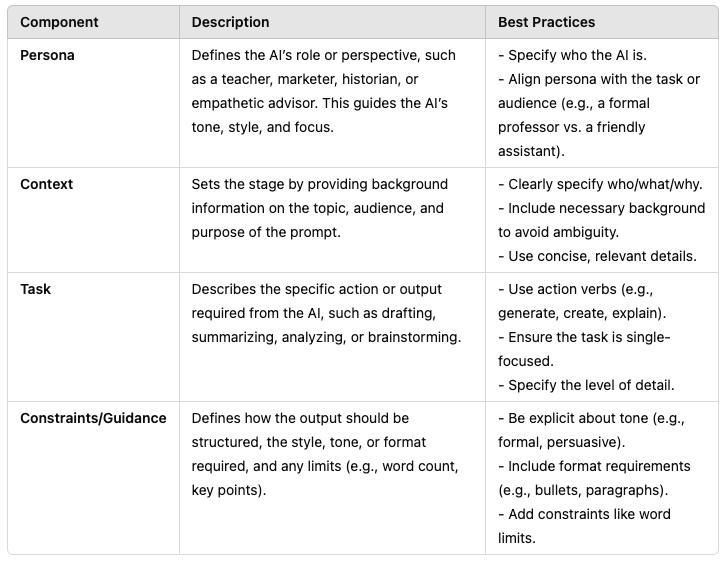
Key tips for effective Prompt crafting
- Test and Iterate: Always review and refine your prompt. The first attempt might not yield the best results.
- Avoid Ambiguity: Use clear, direct language. Ambiguous prompts lead to vague responses.
- Provide Examples: If possible, include an example of what you want. For instance: “Write a review like this: ‘This product is amazing because…’”
- Encourage Creativity: If open-ended answers are okay, say so explicitly
 Hola
Hola 